
Event catering in NYC: how to build a menu that works
By the VESPER events team · Published
Event catering in NYC is judged on two things guests never articulate: whether the food arrived at the right temperature, and whether they had to queue for it. VESPER caters in-house through MADRE, the MICHELIN-recognized kitchen within Room 11 Hospitality, across a 15,000 sq ft floor at 25 Kent Avenue on the Williamsburg waterfront. Every menu here is built around the room and the run of show rather than chosen from a fixed list.
Most menu conversations start with dishes. That is the wrong end. Start with how many people, how long they are in the room, and what has to happen while they eat.
Service format decides the shape of your night
Format changes the feel of an event far more than the menu does. MADRE offers stationed, passed, plated, family-style and grazing, and each one produces a different evening.
Plated gives you control. Everyone eats at once, which makes speeches easy to place and keeps the timeline tight. It needs the highest staffing ratio in the room, and the pace of the courses becomes the pace of the night.
Family-style puts platters on the table and lets guests serve each other. It creates conversation and generally moves faster than plated. It also needs real table space, which a heavily styled tablescape may not leave you.
Stationed spreads guests across the floor and keeps them moving. Good for larger counts and for events that lean more party than dinner. Harder to schedule speeches into, because there is no single moment when everyone is seated.
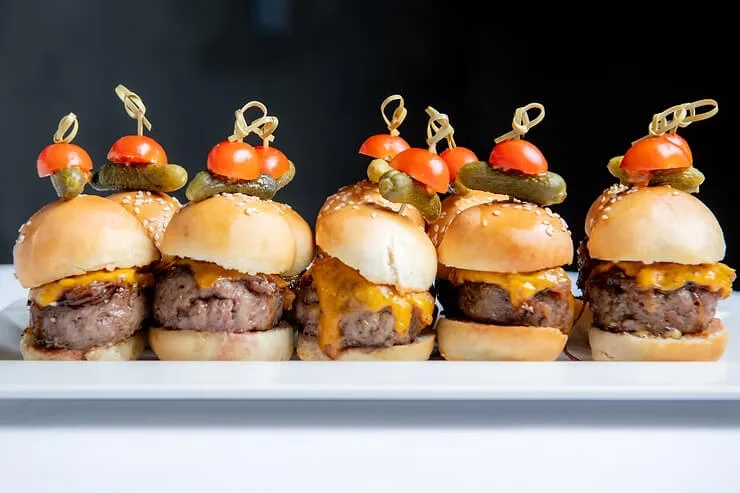
Passed suits cocktail hour and receptions without a formal dinner. It keeps people standing and mixing, and it is the format where quantity per head is most often underestimated.
Grazing works for arrivals and for longer, looser events where people come and go.
You can combine them, and most good events do. A passed cocktail hour into a plated first course into a dessert station is three formats in one night, each doing a different job.
What guests actually notice
Almost nobody remembers the specific dish. They remember whether the food was hot, whether there was enough, and whether they waited.
Temperature is the most common failure at events, and it is a function of distance and time rather than cooking. A kitchen on the same floor as the room changes the math entirely. At VESPER the kitchen is on site, so plates travel a short distance and hold their temperature by default rather than by heroics.
Queueing is a floor plan problem, not a food problem. One station for 200 people creates one line. Two identical stations at opposite ends of the floor halve the wait and double the conversation. Put the bar somewhere separate from the food, because a bar beside a buffet creates a standing crowd exactly where people need to walk.
Building the menu around the guest list
Ask for dietary requirements early and in writing, per person rather than as a headcount.
There is a real difference between a kitchen that builds a proper alternative plate and one that removes components from the main dish. Vegetarian, vegan, pescatarian, dairy-free, no pork, and nut and shellfish allergies are all routine now. The test is whether the alternative looks like a dish someone chose rather than a dish someone was left with.
This matters more than it used to. A table of ten will frequently contain three different requirements, and the person eating the adapted plate notices immediately how much thought went into it.
Where personalization actually lands
The menus that work are not the most elaborate ones. They are the ones with two or three specific moments that mean something to the people hosting.
That might be a late-night run of the fried chicken you and your partner order every Sunday, served in custom buckets. It might be a raw bar built around an ice sculpture, because you want one dramatic thing in the room. It might be recreating a dessert you ate in Europe in 2018 and have talked about ever since.
MADRE builds around requests like these rather than treating them as exceptions. The constraint is practical rather than culinary: anything you personalize should still hold at your guest count and your timeline. A dish that works beautifully for eight can misbehave for two hundred, and the kitchen will tell you which is which.
For a wider view of how catering sits inside the planning process, see our guide to wedding venue catering in Brooklyn and the weddings overview.
Quantities, honestly
Undercatering is the mistake people regret. Overcatering is the one they pay for.
For a cocktail hour with no seated meal to follow, count six to eight passed bites per person. If a seated meal follows, four to six is enough. For a plated dinner, six ounces of protein per person and two sides rather than four, because four means half of each comes back.
Wine at roughly a bottle per two people across three hours is generous rather than tight. Build a proper non-alcoholic option rather than an afterthought, because a growing share of guests are not drinking and they notice when the alternative is tap water.
Add ten percent to every figure. Twenty-five percent over is where money starts going in the bin.
Timing, and the thing that always slips
Something will run late. It is usually the ceremony or the speeches, and it compresses the food.
Build a menu that survives that. Braises, roasts carved to order, grains, pulses and anything with a sauce hold well. Fried food, dressed salads and delicate fish do not. If you want a fried course, place it where a delay cannot reach it.
With one operator this adjustment is invisible to guests. The kitchen and the floor are the same team, so when the timeline moves they move together. With a venue and a separate caterer, someone has to make that call across two companies while your guests are already seated.
Questions worth asking on a tour
Is catering in-house, restricted to a preferred list, or open?
If in-house, what is included: staff, rentals, linens, cake cutting, bar?
Where is the kitchen relative to the room?
What is the staffing ratio for plated service at my guest count?
When is the tasting, who attends, and is it before or after signing?
Who is on site on the day, and can they make decisions without a phone call?
Get the answers in writing. The gap between what is said on a tour and what appears in the contract is where most catering surprises live.
Frequently asked questions
What service formats are available for event catering at VESPER? Stationed, passed, plated, family-style and grazing, all through MADRE, the MICHELIN-recognized kitchen within Room 11 Hospitality. Most events combine two or three: a passed cocktail hour, a plated or family-style dinner, then a dessert station.
How much food do you need per person for an event? For a cocktail hour with no meal following, six to eight passed bites per person. If a seated meal follows, four to six. For a plated dinner, six ounces of protein and two sides. Add ten percent, no more, since twenty-five percent over is where the money goes in the bin.
Can you customize the menu for an event in NYC? Yes. MADRE builds menus around specific requests rather than a fixed list, from a late-night fried chicken service to a raw bar built around an ice sculpture. The practical limit is whether a dish holds at your guest count and timeline, and the kitchen will tell you which do.
How are dietary requirements handled at a catered event? Collected per person in advance and built as proper alternative plates rather than the main dish with components removed. Vegetarian, vegan, pescatarian, dairy-free and allergy requirements are routine. Send them as early as you have them and update as they change.
Does an in-house kitchen actually make a difference? Mostly in temperature and timing. A kitchen on the same floor means plates travel a short distance and hold heat by default. It also means that when the ceremony or speeches run late, the kitchen and the floor adjust together instead of negotiating across two companies.
Plan your event at VESPER
VESPER caters in-house through MADRE across every service format, on a 15,000 sq ft floor with the kitchen on site and one team running the food, the floor and the timing.
To talk through guest count, format and menu, book a private tour.