
Wedding venue catering in Brooklyn: in-house or outside
Wedding venue catering in Brooklyn
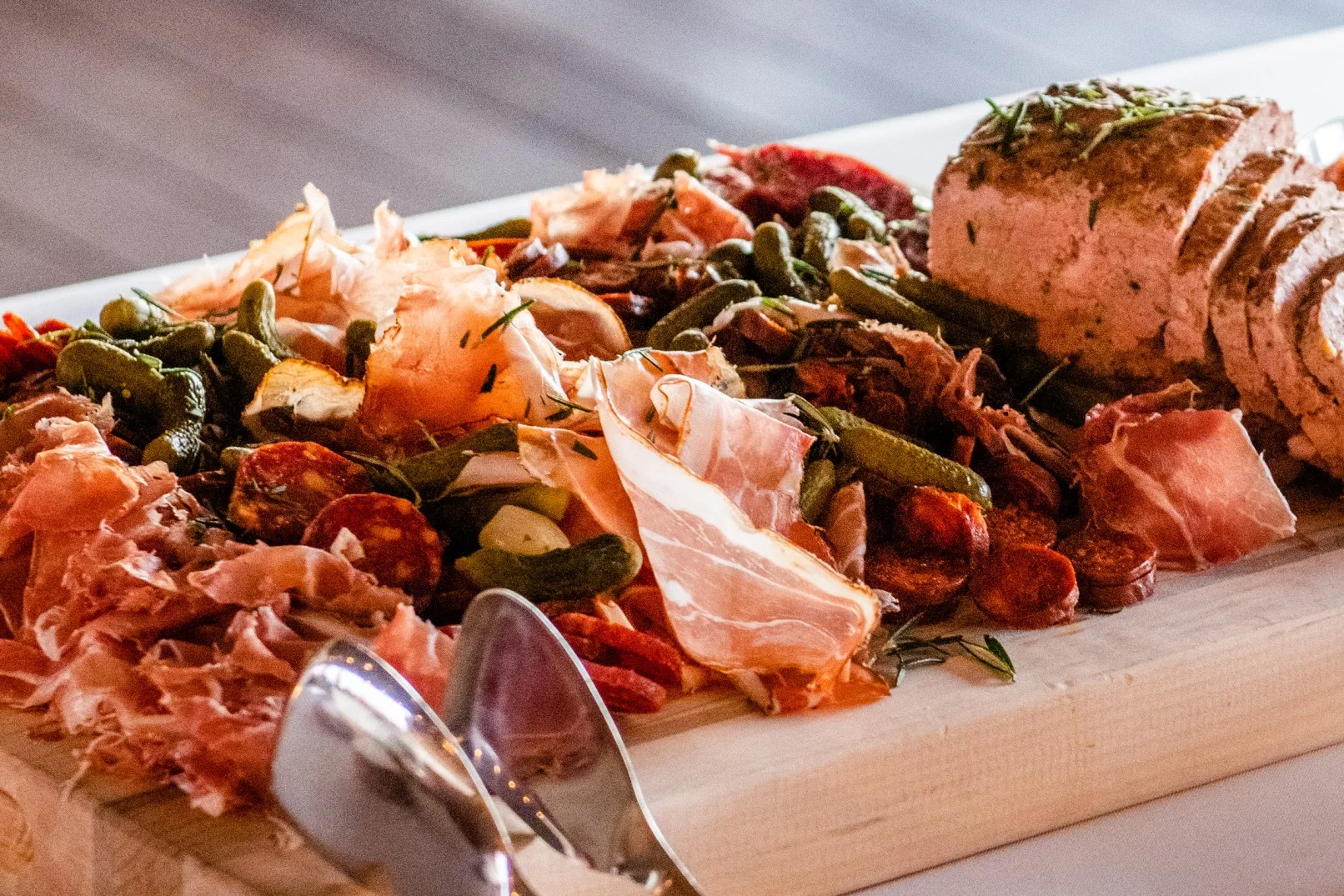
A venue with in-house catering handles the food, the staff, the timing and the kitchen as one operation. A raw space means you hire a caterer, rent the equipment they need and take responsibility for making two vendors work together on your wedding day. VESPER, at 25 Kent Avenue on the Williamsburg waterfront, caters in-house through MADRE, the MICHELIN-recognized kitchen within Room 11 Hospitality, in stationed, passed, plated, family-style and grazing formats.
The choice is not really about food quality. Good caterers exist in both models. It is about how many things you are personally coordinating on the day, and where the costs hide.
What in-house catering actually covers
When catering sits inside the venue, several things come bundled that you would otherwise source and pay for separately:
The kitchen exists and is equipped, so nobody is building a temporary one in a back corner. Service staff are part of the same operation as the venue team, so there is no negotiation about who resets the room after dinner. Plates, glassware, linens and flatware are usually on site. Timing is coordinated by one group, which matters more than it sounds when the ceremony runs fifteen minutes late.
Ask specifically what is included rather than assuming. Two venues can both say in-house and mean different things once you get to linens and staffing ratios.
What a raw space really costs
A venue that lets you bring your own caterer can look cheaper on the rental line. The comparison only works once you add what the caterer needs.
Kitchen equipment rental, sometimes including refrigeration and cooking capacity brought in for the day. Rentals for everything guests touch: plates, glasses, cutlery, linens. Staffing, quoted separately and often per hour with a minimum. Delivery, setup and collection windows that have to fit the venue’s access rules. And a corkage or kitchen fee that many raw spaces charge for the privilege of bringing food in.
None of this makes a raw space wrong. It makes the two quotes non-comparable until you build both out fully. Couples who compare a venue rental against an all-inclusive figure conclude the wrong thing.
The other cost is coordination. On a raw-space wedding, someone has to run the seam between venue and caterer. That someone is usually the couple or a planner they hire.
Service formats and what each does to your day
Format changes the feel of a wedding more than the menu does.
Plated gives you control and a clear structure. Everyone eats at once, which makes speeches easy to place. It needs the highest staffing ratio, and courses set the pace of your evening.
Family-style puts platters on the table and lets guests serve each other. It creates interaction at the table and generally moves faster than plated. It also needs table space that a heavily styled tablescape may not leave.
Stationed spreads guests across the room and keeps them moving. Good for larger counts and for weddings that are more party than dinner. Harder to schedule speeches into, because there is no moment when everyone is seated.
Passed works for cocktail hour and for receptions without a formal dinner. It keeps people standing and mixing.
Grazing suits arrival periods and longer, looser events.
MADRE offers all of these, so the format is a planning decision rather than a constraint imposed by the kitchen.
Tastings, menus and dietary requirements
Ask when the tasting happens and who attends. A tasting after you sign is a different negotiation from one before.
Ask how dietary requirements are handled. Every wedding has them now, and there is a real difference between a kitchen that builds proper alternative plates and one that removes components from the main dish. In-house kitchens tend to do this better because they are cooking in their own space with their own supply.
Ask who is on site on the day. The chef who runs your tasting is not always the chef who runs your wedding, and it is a fair question.
Where the seams appear on a wedding day
The value of a single operator shows up in the moments nobody plans for.
The ceremony runs late, so dinner service compresses. With one team, the kitchen and the floor adjust together. With two vendors, someone has to make the call and communicate it across companies.
Weather moves a cocktail hour indoors. At VESPER the retractable wall already divides the floor into two rooms, so a cocktail hour has somewhere to go without flipping the dinner setup. The rooftop, roughly 5,000 sq ft with a full bar and fire pits, hosts cocktails, photos and the afterparty. Ceremonies and seated dinners happen indoors.
The band overruns. The room needs resetting between dinner and dancing. Every one of these is a coordination question, and every handoff between companies is a place for the answer to be slow.
Questions worth asking on a tour
Is catering in-house, exclusive to a preferred list, or open?
If in-house, what exactly is included: staff, rentals, linens, cake cutting, bar?
If open, is there a kitchen fee or corkage, and what kitchen equipment exists on site?
What is the staffing ratio for a plated service at my guest count?
Who is my point of contact on the day, and do they have authority to make decisions?
How are dietary requirements handled, and when is the tasting?
Get the answers in writing. The gap between what is said on a tour and what appears in a contract is where most wedding budget surprises live.
VESPER holds The Knot Best of Weddings 2026 and the WeddingWire Couples’ Choice 2026. For the full picture see the weddings overview, our guide to choosing a Brooklyn wedding venue, and the questions to ask before booking.
Frequently asked questions
What are the benefits of a wedding venue with in-house catering? One operator handles food, service staff, timing and the room, so there is no coordination seam between vendors on the day. The kitchen, rentals and staffing are usually included rather than sourced separately. At VESPER catering runs through MADRE, the MICHELIN-recognized kitchen within Room 11 Hospitality.
Is in-house catering more expensive than bringing your own caterer? Not necessarily, and the two quotes are not comparable until you build out the raw-space option fully. A venue rental plus caterer also needs kitchen equipment, rentals, staffing and often a kitchen fee or corkage. Compare total delivered cost rather than the headline rental figure.
Can you bring your own caterer to a Brooklyn wedding venue? Some venues allow it, some restrict you to a preferred list, and some cater exclusively in-house. Ask early, because it changes both your budget structure and how much coordination falls to you or your planner on the day.
What wedding catering service formats are available at VESPER? Stationed, passed, plated, family-style and grazing, all through MADRE. Format affects the shape of the evening more than the menu does: plated suits weddings with speeches, family-style creates interaction at the table, and stationed keeps a larger group moving.
How are dietary requirements handled at a wedding? Ask whether the kitchen builds proper alternative plates or simply removes components from the main dish. In-house kitchens generally handle this better because they are cooking in their own space with their own supply. Confirm the process and the tasting timing before signing.
What do you use to set a wedding room? Couples ask on tours. At VESPER the catering runs through MADRE and our team sets the floor, so this is for anyone planning a wedding somewhere without an in-house kitchen and floor team.
Candlelight. Buy more than you think, and check burn time against the length of your reception, because a four-hour reception needs candles rated past four hours: 144 white votives at a 10-hour burn, 48 in clear glass, ivory votives rated to 15 hours, or tea lights for low tables.
Table numbers and seating signage. Guests seat themselves far faster when signage is legible from standing height, which quietly saves you ten minutes at the top of dinner: acrylic sign holders or steel ring-clip number stands.
If you are bringing in a caterer, holding food at temperature is the most common failure at a wedding in a raw space. Proper chafers hold service temperature for hours: the Alpha Living 4-pack stainless set or the 36QT rectangular set with seven food pans, with full-size hotel pans bought at the same time so you do not find the gap on the night. Add a thermometer you trust, either the ThermoWorks Thermapen ONE or the Lavatools Javelin PRO.
Plan your wedding at VESPER
VESPER caters weddings in-house through MADRE across every service format, with the ceremony and dinner indoors and the rooftop available for cocktail hour, photographs and the afterparty. One team runs the food, the floor and the timing.
To talk through guest count, format and menu, book a private tour.
As an Amazon Associate, VESPER earns from qualifying purchases.